Connecticut’s lakes are quietly some of the best freshwater birding in the Northeast, and the easiest way to work them is from a slow-moving pontoon — flat, stable, quiet, with room for a scope and a thermos, and no hiking required. The same deck you’d tube off at noon becomes the best birding blind in the county at dawn, drifting a cove while a great blue heron fishes six feet away.
Base your trip on Lake Lillinonah, Bantam Lake, or Lake Waramaug. Go at first light or the last golden hour. A no-wake pontoon drift gets you closer to a heron, an eagle, or a raft of mergansers than any trail ever will — and on a captained trip, no one in your group needs a boating certificate.
Why a pontoon is the perfect birding platform
Most freshwater birding is a game of edges — marsh lines, coves, snagged timber, the shallow margins where the birds actually feed. A pontoon lets you work every edge on a lake without ever leaving the boat. The deck is flat and stable enough to brace a spotting scope, wide enough that four people with binoculars aren’t elbowing each other, and slow enough that a drift through a cove doesn’t spook the bird you came to see.
- Flat, stable deck: No rocking, no wet hiking boots, no narrow trail. You can set a scope on the rail and actually hold it steady.
- Quiet no-wake drift: A pontoon at idle or under a slow drift is one of the least intrusive ways to approach marsh birds. Shut the motor and you’re floating — no crunching leaves, no snapping twigs.
- Room for gear: Bins, a scope, a camera with a long lens, a cooler, a thermos, a field guide — there’s deck for all of it and a table to set it on.
- Group-friendly and accessible: Grandparents, kids, and non-birders can come along and still have a good morning. A pontoon is step-on, sit-down birding.
- No license needed with a captain: On a captained eco-tour, a licensed captain runs the boat and your group rides as passengers — no Connecticut Safe Boating Certificate required from anyone. See our guide to Connecticut boating license rules.
The birds you’ll actually see on Connecticut lakes
You don’t have to go far to put together a good list. Connecticut’s lakes and the rivers that feed them hold a reliable cast of year-round residents, summer nesters, and migrants that swing through in spring and fall.
- Bald eagle: The headline bird. Eagles nest on Lillinonah and Candlewood, and late fall through winter is prime — when the leaves are down and the birds are sitting the bare shoreline snags. CT DEEP tracks eagle nest territories across the state, and the population has been climbing for years.
- Great blue heron: Year-round, and the one you’ll almost certainly see. They work the marsh edges and shallow flats at first light, standing still as furniture until a fish comes through.
- Osprey: A spring-through-fall resident that plunge-dives for fish right in front of the boat. The big stick nests on platforms and dead snags are easy to spot and easy to watch.
- Belted kingfisher: The rattling, chattering bird that flies ahead of you down the shoreline and then perches to dive. Small, loud, unmistakable.
- Double-crested cormorant: Long-necked, dark, often seen drying its wings on a rock or a buoy. They raft up and fish in loose groups.
- Common loon: A migrant and winter visitor on the bigger lakes — Lake Waramaug and Candlewood are good bets in the colder months. That haunting call is mostly a northern-nesting sound, but a silent loon in November is still a thrill.
- Wood duck: The most beautiful bird on any Connecticut lake, working the wooded coves and beaver edges. Early morning, before the sun is over the trees, is when you see them.
- Mute swan: Year-round on the slower lakes and coves. Graceful, common, and a reliable photo subject for anyone learning a new lens.
- Overhead: Red-tailed hawks and turkey vultures work the thermals above the shoreline hills most afternoons. Keep one eye up.
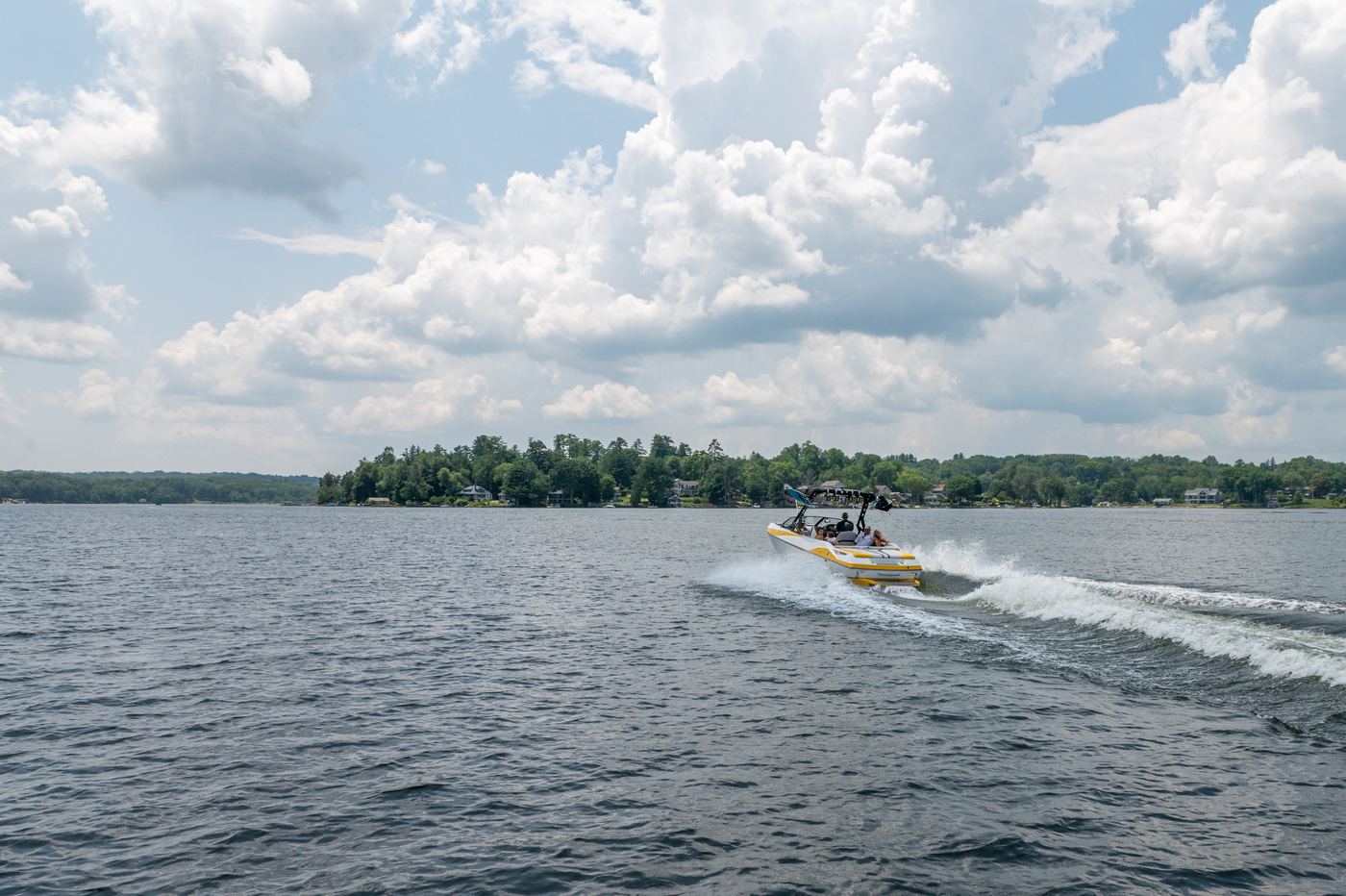
First light on a Litchfield County lake — the hour the herons start working the marsh edge and the eagles come off the roost.
Best lakes for a birding eco-tour
Not every lake birders the same. Here are the four we’d point a friend to first, and what each one is best for.
- Lake Lillinonah, New Milford: The eagle lake. It’s a slow, Housatonic-backed impoundment with wooded shoreline and a real winter eagle population. Herons work the shallow south end, and a no-wake drift down a wooded bank puts you under perched birds without spooking them.
- Bantam Lake, Litchfield/Morris: The premiere birding lake in the county, and that’s largely because of the White Memorial Conservation Center marsh at the north end. The marsh holds rails, marsh wrens, bitterns on a good day, and a constant rotation of waterfowl. A pontoon lets you work the marsh edge that a trail only glimpses.
- Lake Waramaug, Washington: The quiet one. Deep, scenic, ringed by forest, and a reliable stop for common loons and diving ducks in migration. The coves are the place to drift — that’s where the wood ducks are.
- Candlewood Lake, Danbury/Brookfield/New Milford: The big one. Lots of varied shoreline, a resident eagle pair, and enough water that you can pick a quiet arm and essentially have it to yourself on a weekday morning.
When to go: timing the tides of bird activity
Birding from a boat runs on the same clock as birding on foot — the birds are busiest when the light is low and the people aren’t out yet.
- First light: The first 90 minutes after sunrise is the best birding of the day. Herons, eagles, and kingfishers are all active, the marsh is alive, and the water is usually glassy.
- Last hour of light: The evening golden hour is the second peak. Eagles come off the thermals to roost, herons head back to the marsh, and the light is doing all the work for your photos.
- Spring & fall migration: Loons, diving ducks, mergansers, and the warblers moving through the shoreline trees. The lakes get genuinely busy with birds that aren’t here in July.
- Winter: Eagle season. With the leaves down, perched birds are easy to spot, and the open water on the bigger lakes concentrates them.
- Avoid: A midday summer trip is the quietest time on the water. It’s a nice boat ride, but it’s not a birding trip — the birds are resting and so should you.
Go early, and once you’re in a cove, shut the motor and drift. A pontoon barely moves on calm water, and the silence is what gets you close. The birds reset within a couple of minutes of the motor going off — that’s when the heron starts feeding again and the kingfisher comes back to its perch.
What to bring on a birding pontoon trip
The boat gives you the platform; you bring the optics. Here’s the kit that actually matters on a morning eco-tour.
- Binoculars: An 8x42 is the sweet spot — wide field of view, steady enough to hold on a boat, bright in low light. A 10x42 works too but is harder to hold still.
- Spotting scope & mount: If you have one, bring it. A scope on the rail turns a distant eagle into a portrait. A window/tripod mount clamps to the pontoon rail nicely.
- Camera with a telephoto lens: The flat deck and the slow drift are made for a long lens. Bring more card than you think you need.
- A bird ID app or field guide: eBird and the Sibley app both run offline and cover everything you’ll see here. A paper guide never runs out of battery.
- Neutral clothing & a quiet group: Muted colors and low voices buy you distance. The boat does the sneaking; the people have to help.
- Patience: The single most important thing to pack. The birds come to you if you let them.
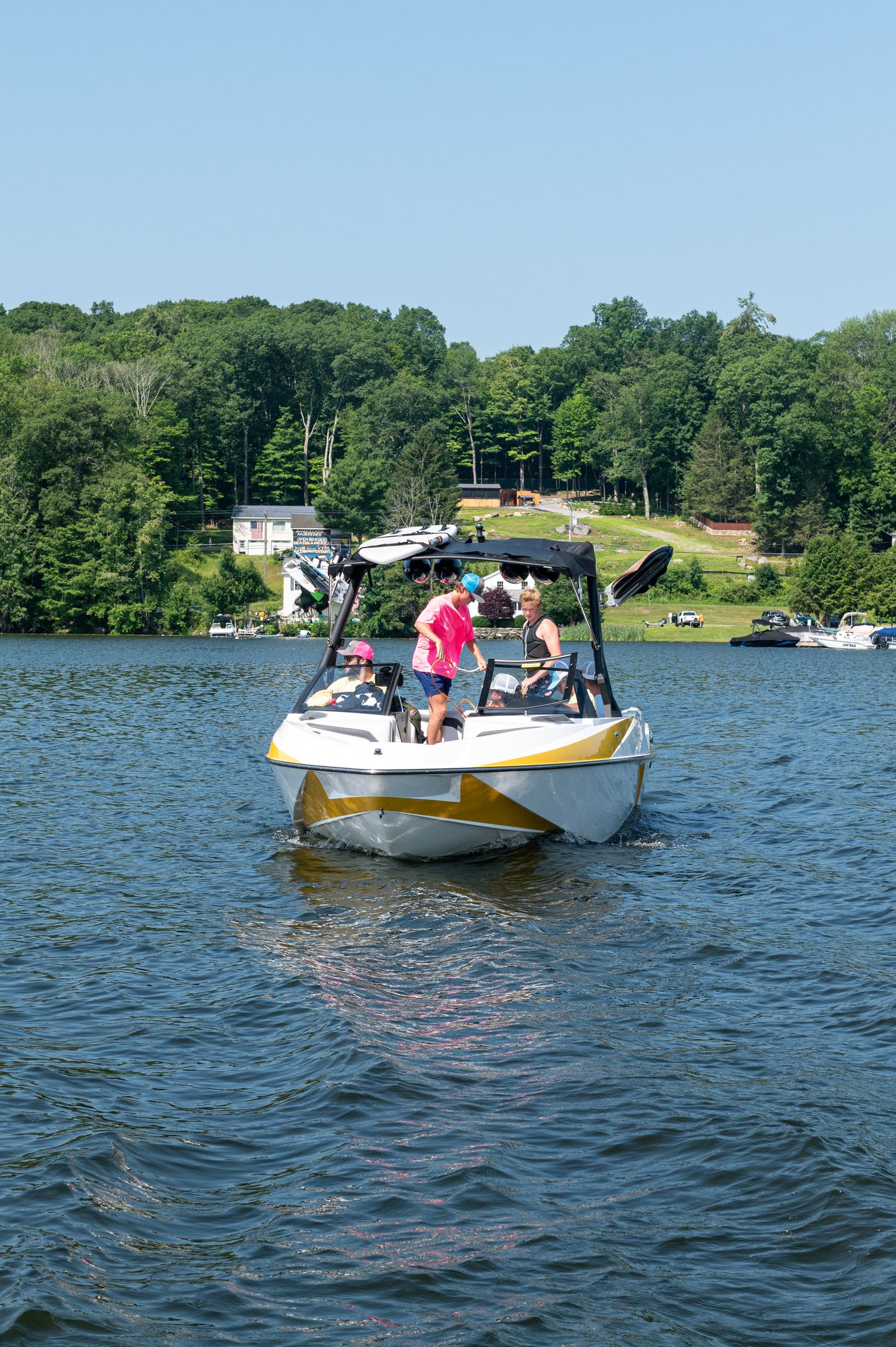
Drifting a cove with the motor off — the move that turns a nice boat ride into a real birding morning.
Eco-tour vs. a watersports day
Here’s the thing people miss: it’s the same pontoon. The boat that pulls a tube at 2 p.m. is the boat that drifts a marsh at 6 a.m. That makes an eco-tour the perfect fit for a mixed group — the grandparent who has no interest in wakeboarding, the kid who’s done with the tube, the partner who just wants to be on the water. A slow birding hour and a sunset swim can live in the same trip.
If someone in your group does want the action, you can split the day: a quiet first-light eco-tour for the birders, then a watersports charter or a wakesurf set later when the water’s warm. The boat handles both. For families with kids who want to learn, the summer watersports clinics run all season and a birding hour pairs with them better than another pool afternoon.
Quick FAQ
Drift Connecticut’s lakes on a captained eco-tour pontoon
Eagles, herons, and a quiet no-wake drift through the coves — first light on a Connecticut lake is the best freshwater birding in the region, and a captained pontoon is the easiest way to do it. No license, no hiking, no experience needed.
Book a Charter See Pontoon Charters