Short answer: yes, if you're going to drive a motorized boat in Connecticut, you need a state-issued Safe Boating Certificate (SBC) — and if you're on a jet ski, you need a separate Certificate of Personal Watercraft Operation (CPWO). It's not a "license" you renew; it's a one-time certificate that's good for life. Here's exactly who needs one, how to get it without leaving your couch, what it costs, and the one big situation where you don't need one at all.
Operating any motorized vessel in Connecticut — including a small boat with an electric trolling motor — requires a CT Safe Boating Certificate. Passengers don't. And if you're on a captained charter (like ours), you are a passenger — no certificate needed from anyone in your group.
What Connecticut actually requires
Connecticut law requires the operator of any vessel with a motor — gas or electric, regardless of horsepower — to carry a valid Safe Boating Certificate while underway. That includes:
- Motorboats and runabouts of any size
- Pontoons (the most common rental on our lakes)
- Boats with electric trolling motors — yes, even a jon boat with a 30-lb thrust trolling motor counts
- Sailboats with auxiliary engines
- Personal watercraft (Jet Skis, Sea-Doos) — these require the separate CPWO and the operator must be at least 16
What does not require a certificate: paddling a canoe, kayak, or stand-up paddleboard, or operating a sailboat with no motor. Non-motorized is the line.
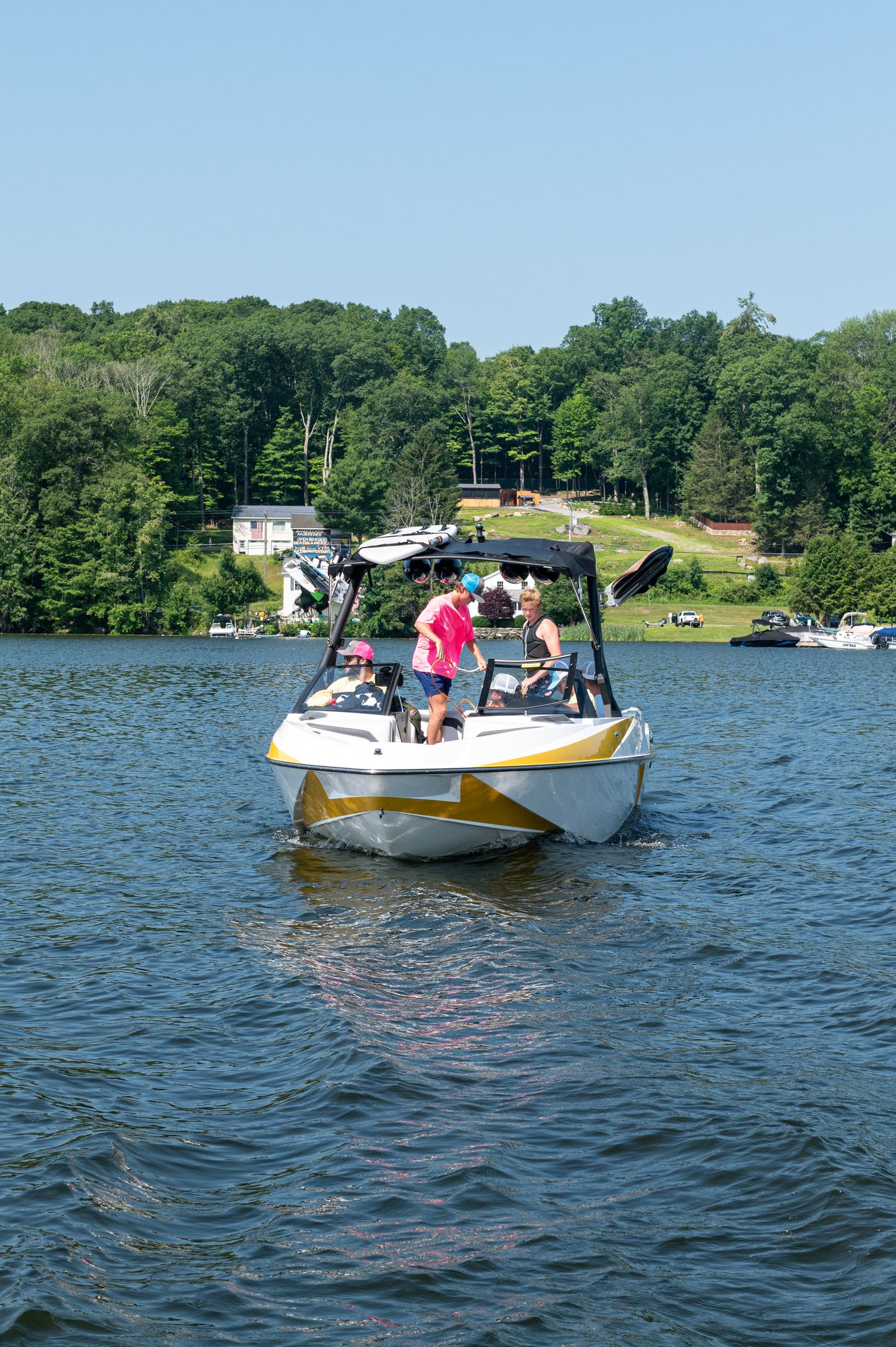
On a captained charter, your group rides as passengers — no certificate required from anyone.
Is it a "license" or a "certificate"?
People call it a boating license, but Connecticut issues a certificate, not a license. The difference matters: a license usually expires and needs renewal. The CT Safe Boating Certificate, once issued as a durable (plastic) card, is valid for life with no renewal and no expiration date.
One catch: certificates earned before January 1, 2014 were issued on paper and those paper certificates are no longer valid for operation. If you took the course years ago and have a paper card, you'll need to request a replacement durable card from CT DEEP before you operate.
How to get your CT Safe Boating Certificate
The process is straightforward and you can do almost all of it online. Here's the path most people take:
- Take a NASBLA-approved boating safety course. Connecticut accepts online courses from approved providers (such as Boat Ed, BOATsmart!, and ilearntoboat). The online course runs roughly 3–6 hours and you can start and stop on your own schedule. Some providers also offer an interactive, gamified course.
- Pass the final exam. The exam is built into the course. Pass it and the provider issues a course completion certificate (sometimes called a "temporary boating certificate").
- Apply to CT DEEP for your permanent certificate. You submit your course completion proof to the Connecticut DEEP Boating Division and pay the state certificate fee. DEEP mails you the durable, lifetime card.
- Carry it on the water. Keep the card with you whenever you operate. Environmental Conservation Police and other officers can ask to see it.
What it costs
You'll pay two things: the course provider's fee (typically $30–$60 for the online course and exam) and the state certificate fee paid to DEEP. Fees change over time, so confirm the current amounts on the CT DEEP Boating Division page before you apply.
| Item | Typical cost | Paid to |
|---|---|---|
| Online boating safety course + exam | $30–$60 | Course provider |
| Safe Boating Certificate (lifetime) | State fee (see DEEP) | CT DEEP |
| Replacement / durable card | State fee (see DEEP) | CT DEEP |
| Certificate of Personal Watercraft Operation | State fee (see DEEP) | CT DEEP |
Personal watercraft: the stricter rule
Jet skis and other personal watercraft (PWC) are treated more strictly than boats in Connecticut. To operate a PWC you need the Certificate of Personal Watercraft Operation, and you must be at least 16 years old. Many approved courses let you earn both the SBC and the CPWO together. No one under 16 may operate a PWC in Connecticut, period — even with adult supervision.
If you think you'll ever rent or drive a jet ski in Connecticut, take the combined course that covers both the Safe Boating Certificate and the CPWO in one go. It's barely extra effort and saves you from having to come back later.
Visiting from out of state?
Connecticut recognizes boating certificates issued by other states and countries as long as the course was NASBLA-approved. If you hold a valid boating safety certificate from your home state, you can generally operate on Connecticut waters with it. If your home state doesn't require any certificate, you'll need a CT certificate to operate a motorized vessel here. When in doubt, the safe move is to carry proof of your home-state course completion.
When you don't need a certificate at all
Here's the part that surprises a lot of people: you do not need a Safe Boating Certificate if you're not the one operating the vessel. If you're a passenger, you're free to just enjoy the ride.
That's exactly the situation on a captained charter. When you book a captained pontoon or watersports charter with us, a licensed captain drives the boat the entire time. Your group is along as passengers — no certificate, no test, no course, and no prior boating experience required from anyone. You get all the fun of being on the water with none of the paperwork.
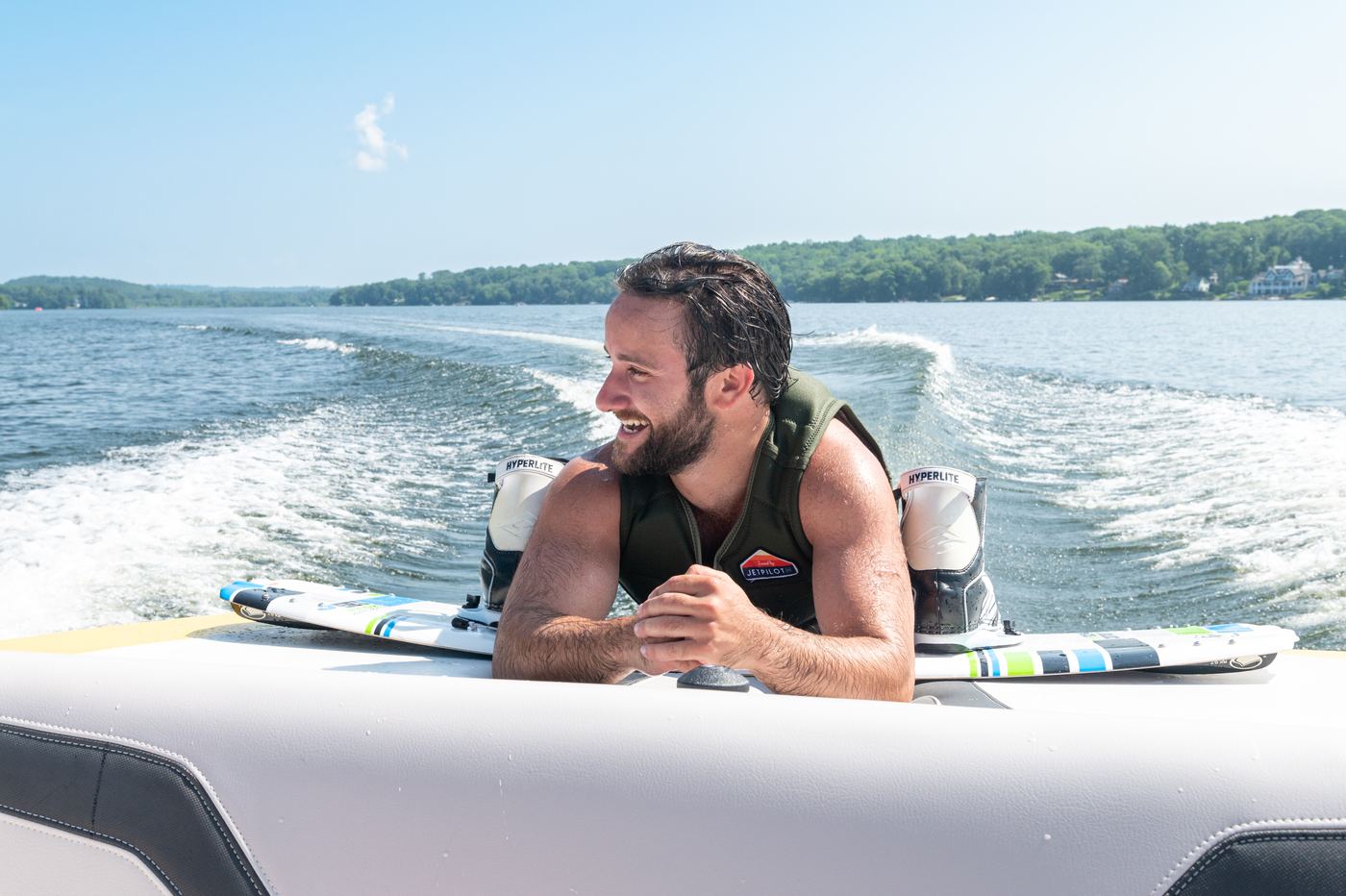
No certificate, no test — just show up and ride.
Quick FAQ
Skip the paperwork — ride with a captain
You don't need a certificate, a boat, or any experience to get on the water this weekend. Our captained pontoon and watersports charters on Candlewood Lake and Lake Lillinonah include everything — boat, fuel, gear, and a licensed captain who handles the driving.
Book a Charter See Pontoon Charters