Anyone who has packed a 14-year-old into a car for a lake day knows the rhythm: an hour of enthusiasm, two hours of "there's nothing to do," and then the phone comes back out. The activities that fix that aren't more swimming or another sandwich — they're things with a skill to learn, a thrill to chase, and content to film. Here's the lineup we've watched win teenagers over on Candlewood Lake and Lake Lillinonah, from the easy wins to the ones they'll talk about on the ride home.
Skill + thrill + content. A teen activity needs all three. Pure thrill (tubing) is fun for ten minutes. Pure skill (paddling) feels like gym class. Add a phone and a trick to learn, and you've got a full afternoon.
Wakesurfing: the one they'll actually put the phone down for
Wakesurfing is the easiest "wow" on the water, and the one teens pick up fastest. The boat pulls them up on a short board, then they drop the rope and ride the endless wave the boat shapes behind it. Low speed, no impact on the body, and a learning curve that gives them a real win inside the first session. Most first-timers are up and riding within a few tries on a calm morning on Candlewood or Lillinonah.
What makes it click for teenagers: it's genuinely cool-looking, it's low-impact (no faceplants like wakeboarding), and once they're up, it feels like surfing an endless wave. Our captain dials in the wake to their size and skill level, so a 13-year-old and a 17-year-old both get a wave they can actually ride. See wakesurfing charters and lessons for how a session runs.
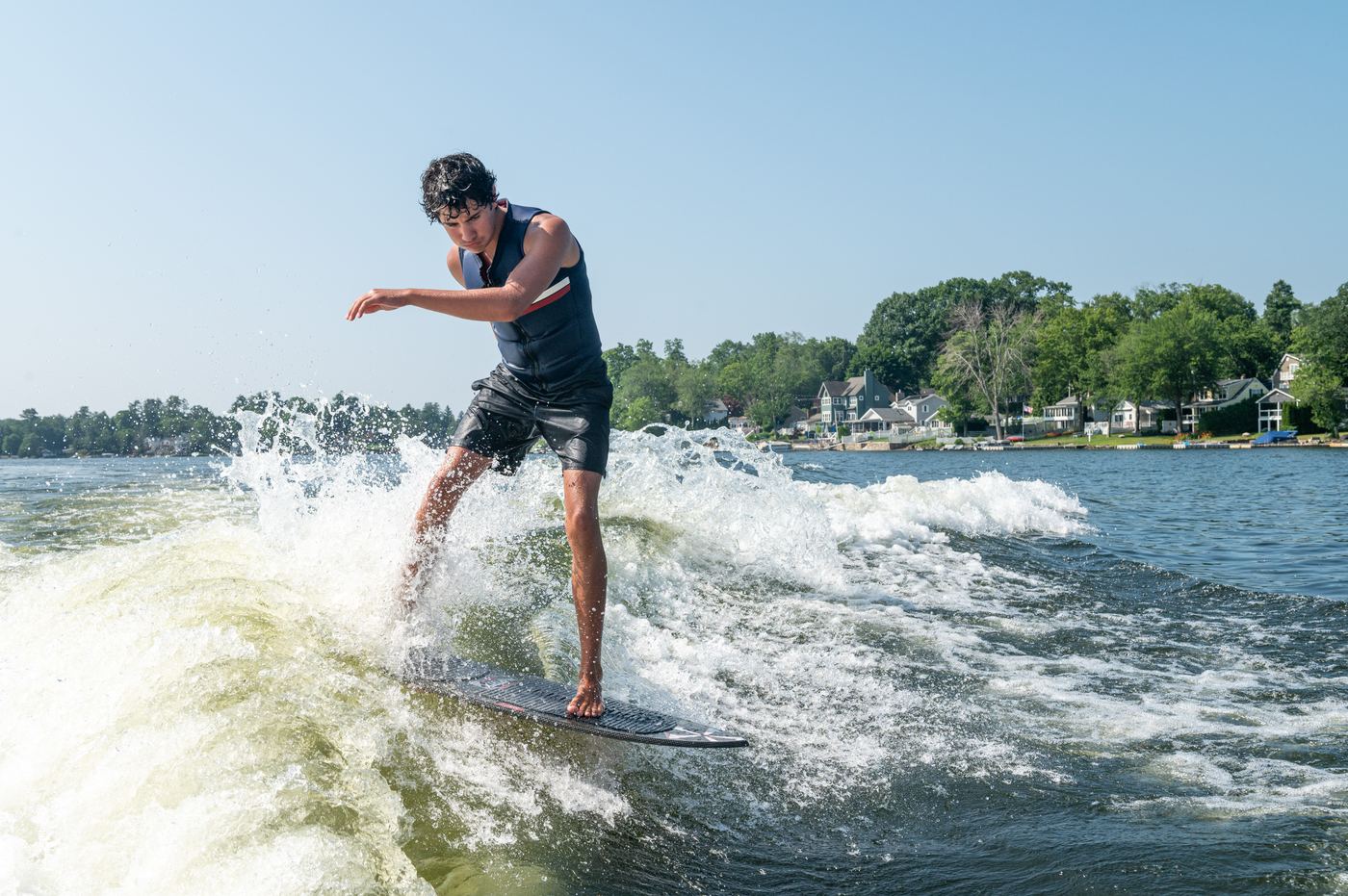
Drop the rope, ride the wave. Wakesurfing is the activity most teens ask to do again before the day's over.
Wakeboarding: the classic teen challenge
If wakesurfing is the easy win, wakeboarding is the one they'll brag about. It's faster, it's higher, and there's a clear progression: get up, get comfortable, carve, jump the wake, maybe a 180. The first time a teenager gets up on a wakeboard and carves across the wake is usually the moment a lake day stops being "boring."
Our captain teaches the get-up, sets the speed to the rider (teens usually ride in the 16–19 mph range), and dials the wake shape to their level. Beginners get a cleaner, mellower wake to learn on; stronger riders get a bigger, sharper wake to jump. The trick is to start with a short set (10–15 minutes), get them up and successful, and then let them rest and watch friends try. That cycle keeps the energy up all day.
Book the first session early in the day, when the water is calmest. Glassy water makes the get-up easier and the falls softer. Save tubing for the afternoon chop.
Tubing, upgraded: tube wars and the rodeo tube
Tubing on its own is fine, but it wears off fast. The way to keep teenagers on a tube is to upgrade the tube and the game. A few ways we mix it up:
- Big multi-rider tubes. A 3- or 4-person tube means friends ride together, which means they laugh together instead of waiting their turn on the dock.
- Tube wars. Two tubes side by side, last one still on wins. This is the one teens remember. Set it up with a clear, open, deep-water lane and an adult on the throttle who knows the line between fun and unsafe.
- The rodeo tube. A lower, rounder "disc" or deck tube that's harder to stay on — more bucking, more splashes, more laughs. Best for older teens who can swim well and want a harder ride.
Safety ground rules: an adult (our captain, on a charter) always controls speed, the tow rope stays clear of the tube and riders, everyone wears a properly fitted life jacket, and we keep speed appropriate to the tube, the rider, and the water conditions. Faster is not better — controlled speed with gentle turns is what keeps riders on and unhurt.
Cliff jumps and rope swings: only the known, legal spots
This is where the conversation has to get honest. Cliff jumping and rope swings are the things teens want to do, and the things that go wrong fast when people pick the wrong spot. Connecticut lakes have a few well-known, long-used swimming spots and rope swings that locals have used for generations. Those are the only ones to use.
What we don't do — and what no one should do — is jump or swing into water we haven't confirmed is deep enough and clear of rocks, logs, or debris. A drop that looks fine from above can be four feet deep. Water levels change week to week. Unknown "spots" shown on social media are not vetted.
- Only jump or swing at well-known, established spots that locals actually use.
- Always check the depth yourself before anyone jumps — and re-check if water levels have dropped.
- Never jump from a height you haven't watched someone else do safely first.
- Avoid cliffs and swings after heavy rain or in high, fast water.
- And remember: many lakes in Connecticut have rules against jumping from bridges, dams, or tall cliffs. Respect posted signs and any CT DEEP or town ordinances.
On a charter, ask the captain. We know the safe, deep swimming holes and the ones to avoid. We won't take a group somewhere we wouldn't send our own kids.
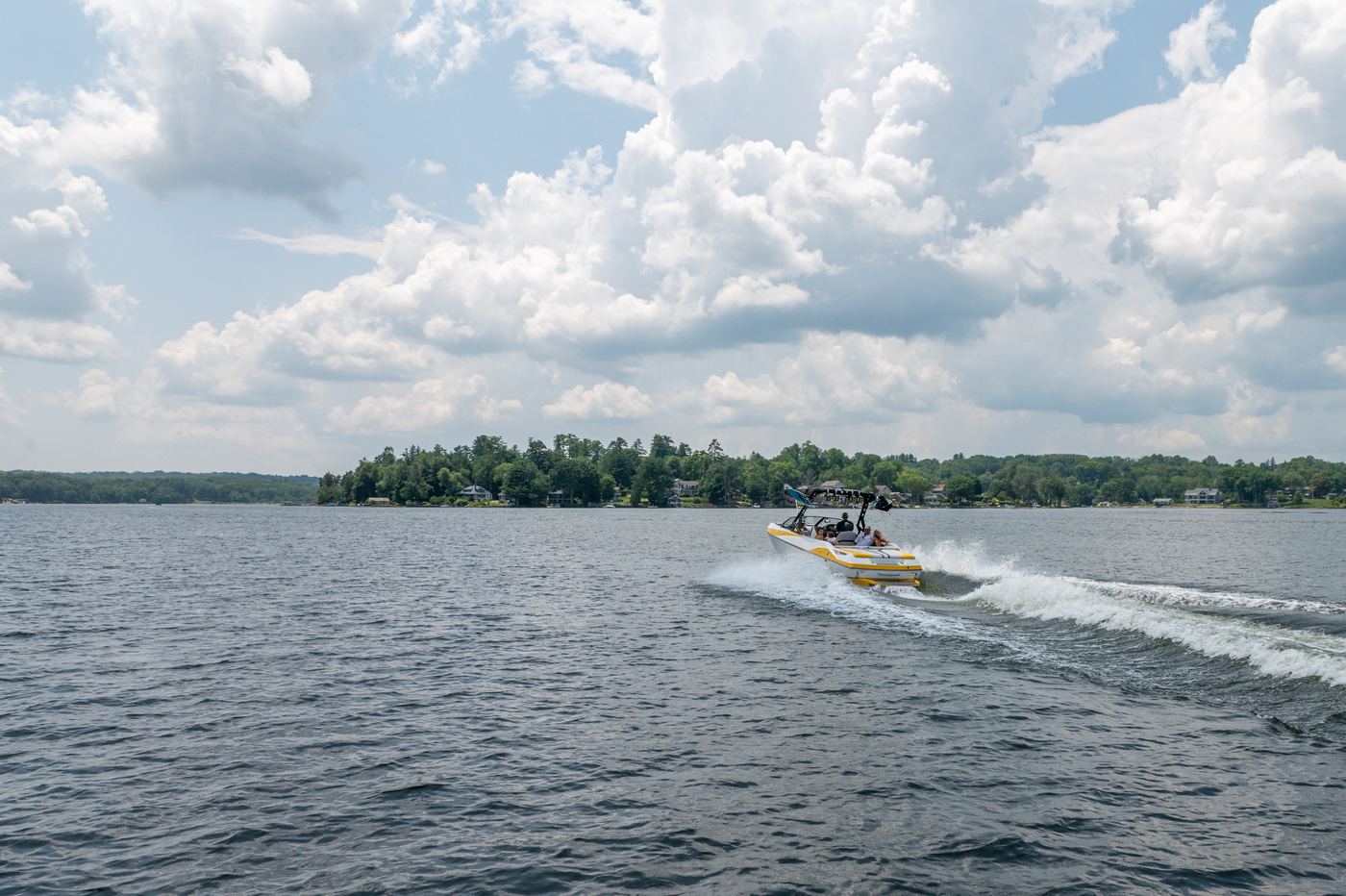
The lake has calm, deep coves that make great swimming and paddle stops — ask the captain where it's safe.
Paddleboard races and floating obstacle fun
When the boat is anchored for lunch or a swim break, the flat-water games are what keep teenagers off their phones. A few that work on any calm cove:
- Paddleboard races. Two or three boards, a buoy or the anchored boat as the turn, first one back wins. Even kids who've never paddled figure it out in a few minutes and the splashing is half the fun.
- Paddleboard relay. Ride out to the boat, tag the next rider, they ride back. Works with two boards and a group of four to six.
- Floating obstacle course. A couple of noodles, a ring toss, and a paddleboard create a course that's silly enough to keep everyone laughing and hard enough to actually try.
- SUP wrestling. Two riders on one board, last one still on wins. Keep it in shallow, calm water and only with kids who swim well.
These work because they're social, they're easy to film (more on that below), and they use gear that's already on the boat or dock. No special equipment, no waiting for a turn on the boat — just an anchored cove and a little competition.
Content creation: GoPro, drone, and the edit on the ride home
Here's the part most parents fight and shouldn't: the phones. Used wrong, a phone ruins a lake day. Used right, it's the thing that gets a teenager to try the wakeboard jump they were scared of. The trick is to channel the content impulse instead of banning it.
Ways teens actually make lake content (that we've seen win):
- GoPro on the tow rope. A clip mount on the rope or a board-mounted GoPro gets the rider's full run on video — the get-up, the carve, the fall. This is the single most rewinded clip on the ride home.
- Drone footage. If your teen flies a drone, a calm morning on the lake is one of the best places to use it. (Follow FAA rules, respect privacy, and keep clear of other boats and swimmers.)
- The "best wipeout" reel. One person films, everyone tries to one-up each other. The worse the fall, the better the clip. This is genuinely the most effective way to get teens to try harder things.
- The edit on the ride home. Pick one reel of the day. That's it. It keeps the phone in their hand for the drive back and off their hand for the day on the water.
The phone policy that actually works: one reel, then phones away
The hard rule that's worked for us and a lot of families we take out: one reel of the day, then phones away. Here's how it plays out:
- Phones go in the dry bag at the start of the day. Not as punishment — because that's where they're safe and because the day is about being on the water.
- The group agrees on the one reel they're making. "Wipeouts," "first wakeboard get-up," "tube wars" — let them pick. This makes the phone a tool for the day, not an escape from it.
- Phones come out for set, planned moments. The GoPro runs during the ride, someone films the tube wars, the drone goes up once in a calm cove. Everyone knows when.
- The edit happens on the ride home. That's the screen time they earn, and it's the thing they actually want to do — assemble the day into something they'll post and rewatch.
This works because it gives teens what they want (content, a little flex, a story to share) and it gives parents what they want (a day where the kids are actually present, engaged, and trying things). Banning phones loses. Channeling them wins.
The quick comparison: what to pick for your group
Not every group is the same. Here's how the activities stack up by thrill and skill so you can plan the day:
| Activity | Thrill level | Skill needed | Best for |
|---|---|---|---|
| Wakesurfing | Medium | Low — most ride first session | All teens, especially first-timers |
| Wakeboarding | Medium-high | Medium — get-up takes practice | Athletic teens who want a challenge |
| Tubing / tube wars | High (but low skill) | None — hold on | Groups, all ages, end-of-day fun |
| Cliff jumps / rope swings | High | Low, but judgment is everything | Only known, legal, deep-water spots |
| Paddleboard races | Low-medium | Low | Swim breaks, calm coves, all ages |
| Content / filming | None (it's the multiplier) | None | Layer onto any of the above |
Quick FAQ
The teen hit: wakesurfing & wakeboarding lessons
Our captain teaches, the boat builds the perfect wake, and they'll actually put the phone down. Wakesurfing and wakeboarding are the activities most teens ask to do again before the day's over — book a charter and let them learn on Candlewood or Lillinonah this season.
Book a Charter See Wakeboarding Lessons