"Is the lake clean?" is the single most common question we get from families booking a pontoon charter in July and August — usually asked right after "can the kids actually swim?" It's a fair question, and the honest answer is that Connecticut's lakes are generally safe to swim in, but conditions change week to week and even day to day. A lake that was crystal-clear last Saturday can have a bacteria advisory posted on Tuesday after a thunderstorm. Here's how to actually check Connecticut lake water quality before you go, how to read what you find, and which lakes around us tend to test cleanest.
Before any lake day, do two things: check the CT DEEP State Swimming Area Water Quality page for the beach you're headed to, and don't swim for 24–48 hours after a heavy rain. Those two habits cover the vast majority of water-quality risk in Connecticut.
What actually affects lake water quality
Lake water in Connecticut isn't "dirty" the way ocean water near a city can be. Most of our lakes are fed by groundwater, streams, and rainfall, and they test clean the majority of the summer. The problems that do show up tend to fall into four buckets:
- Bacteria after heavy rain (runoff). After a big storm, rain washes fecal bacteria from shorelines, lawns, roads, wildlife, and sometimes septic systems into the lake. Bacteria counts spike within hours and usually settle back down in 24–48 hours.
- Cyanobacteria (blue-green algae) blooms. In warm, calm, nutrient-rich water, cyanobacteria can multiply into a visible green scum. Some cyanobacteria produce toxins, so a visible bloom is treated as a "stay out" signal regardless of test results.
- Invasive species. Eurasian water-milfoil, zebra mussels, and other invasives don't usually make you sick, but they harm water quality, tangle swimmers, and spread easily between lakes on boats and gear.
- Nutrient runoff (phosphorus, nitrogen). Lawn fertilizer, farm runoff, and shoreline erosion feed algae growth over time. This is why some lakes bloom more than others — it's about the watershed, not the lake itself.
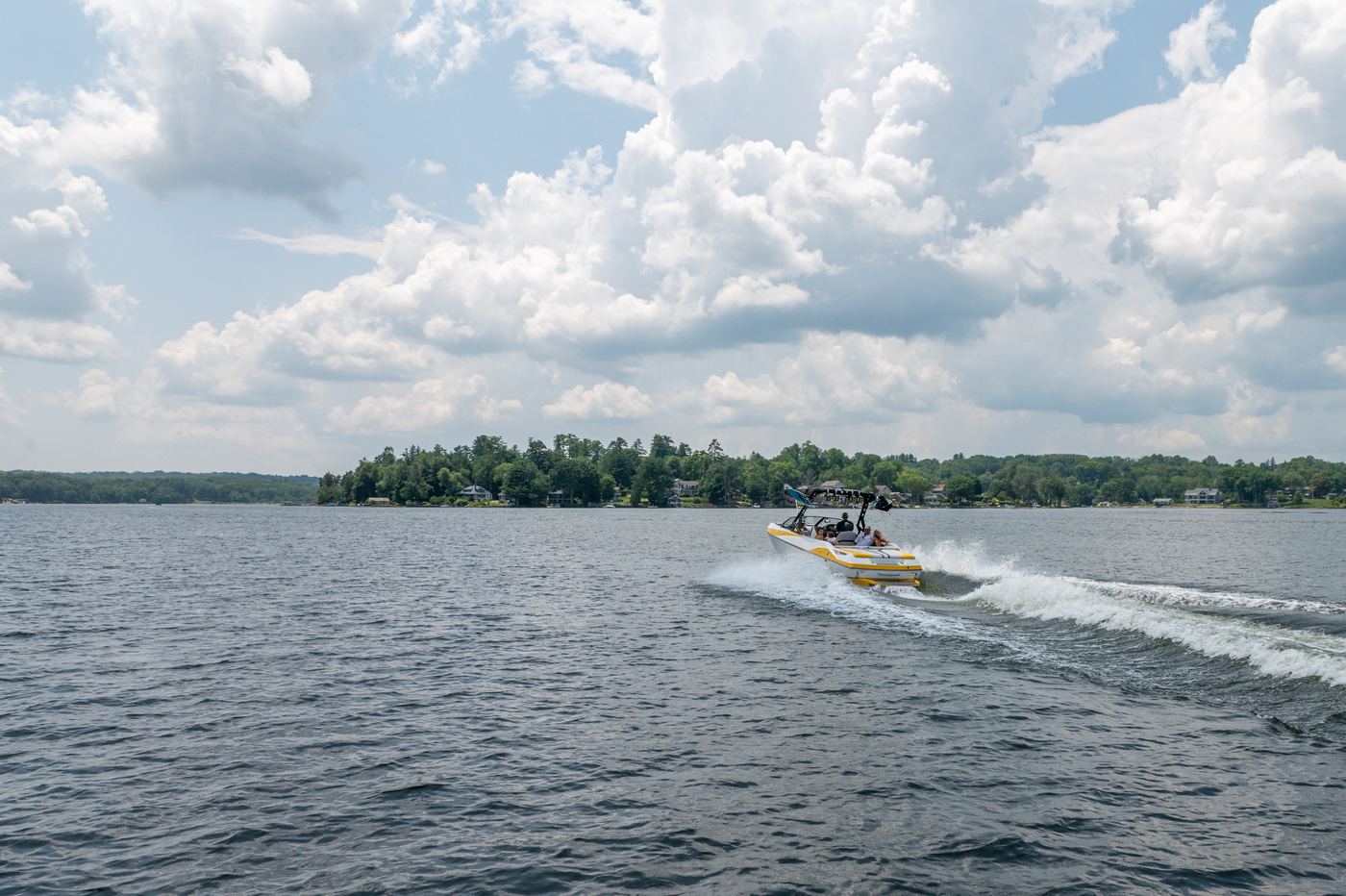
Most Connecticut lakes test clean for swimming the majority of the summer — the exceptions are usually short-lived.
Where to check before you go
Connecticut doesn't publish a single "lake-by-lake" report card for every water body, but there are two official sources that cover the swimming beaches where most families actually go:
- CT DEEP State Swimming Area Water Quality Monitoring. DEEP samples bacteria levels at state park swimming areas throughout the season and posts closures and advisories on its CT DEEP swimming area water quality page. This is the first place to check for state beaches like Squantz Pond, Indian Well, Hammonasset, and Rocky Neck.
- Local health departments. Town-run beaches and private lake associations are monitored by the local director of health, not DEEP. For lakes like Waramaug, Candlewood, and Lillinonah, check the town's beach status before you go — most post updates on the town park page or a town swim hotline.
For our home lakes — Candlewood and Lillinonah — we check the town beach postings in New Milford, Brookfield, and Danbury, and we keep an eye on the DEEP page for Squantz Pond (the state beach at the north end of Candlewood).
How to read bacteria counts (E. coli)
Connecticut monitors swimming areas primarily for E. coli as an indicator of fecal contamination. You don't need to memorize the science, but it helps to know roughly what the numbers mean:
- Below 235 cfu/100mL — generally safe for swimming. This is the single-sample threshold most Connecticut beaches use to stay open.
- 235–1,000 cfu/100mL — elevated. A beach may post an advisory or close until a re-test comes back clean, especially for the state's designated swimming areas.
- Above 1,000 cfu/100mL — closure territory. The beach stays closed until two consecutive clean samples come back.
Don't fixate on a single number. Bacteria counts bounce around. What matters is the pattern — a beach that's been clean all summer and posts one elevated sample after a storm usually reopens within a day or two.
Swim advisory vs. closure: what each one means
People use "advisory" and "closed" interchangeably, but they're different. A swim advisory means the beach is open but the operator recommends you don't swim (or don't put your head under). A closure means swimming is not permitted at all and the beach is typically staffed to keep people out of the water.
If the beach you're headed to has an advisory or closure posted, the simplest move is to reschedule or pick a different lake for the day. If you're already there and an advisory is posted (not a closure), keep kids out of the water, don't put your head under, don't swallow water, and shower when you get home. Closures mean stay out entirely — no swimming, no wading, no letting the dog in.
Cyanobacteria: what it looks like and why it matters
Of everything that can show up in a Connecticut lake, cyanobacteria (blue-green algae) is the one worth being genuinely cautious about. A bloom looks like green paint, pea soup, or a thick green scum on the surface, often blown into a corner of the lake or along a quiet shoreline. It can show up fast in warm, calm weather and disappear just as fast when the wind shifts.
Some cyanobacteria produce toxins that can irritate skin, upset the stomach, and in larger exposures cause more serious illness. Kids are more vulnerable because they swallow more water, and dogs are especially at risk — they'll happily drink lake water and lick algae off their fur. If you see anything that looks like a bloom, keep yourself, your kids, and your dog out, and don't let the dog drink from the lake. Blooms can last anywhere from a few hours to several weeks depending on weather and nutrients.
Which Connecticut lakes tend to test cleanest
No lake is "guaranteed" clean — that's the whole point of monitoring. But some lakes around us have a long track record of good summer water quality:
- Lake Waramaug (New Preston/Washington) — a spring-fed lake with an active watershed protection group; the state park beach there generally posts clean samples through the season.
- Candlewood Lake (New Milford, Brookfield, Danbury, Sherman, New Fairfield) — the largest lake in Connecticut and usually clean for swimming. After heavy rain, the quieter coves can have short-lived bacteria spikes, so check the town beach postings.
- Lake Lillinonah (Bridgewater, Brookfield, Newtown, Southbury) — an impoundment of the Housatonic River, so it's more affected by upstream flow and runoff. On calm, dry weeks it's a beautiful swim; after a storm, give it a day or two.
For a broader rundown of swim-friendly lakes, see our Connecticut swim lakes guide. If you're joining us on a Candlewood charter or a Lillinonah trip, ask the captain on the morning of your charter — we'll know what's posted that day.
How to be a smart lake swimmer
Most of water-quality safety is common sense. Here's the short list we follow ourselves:
- Wait 24–48 hours after heavy rain. This single habit eliminates the majority of bacteria exposure on Connecticut lakes.
- Avoid weedy, shallow, stagnant areas. Bacteria and algae concentrate where water doesn't move and where geese and ducks gather.
- Don't swallow lake water. Easier said than done with kids, but it's the main route of exposure.
- Don't swim near a visible algae bloom. If it looks like pea soup or green paint, stay out and keep the dog out.
- Shower after swimming. Rinse off lake water, especially before eating.
- Keep cuts and scrapes dry or covered. Open wounds are an easy entry point for bacteria.
Quick checklist: what to check before you go
| What to check | Where to find it | Red flag |
|---|---|---|
| State beach bacteria results | CT DEEP swimming area water quality page | Closure or advisory posted |
| Town beach status | Town park & rec or health dept. page | "Closed" or "No Swimming" sign |
| Recent rainfall | Any weather app, last 24–48 hrs | More than ~1 inch in 24 hrs |
| Visible algae | Shoreline where you'll swim | Green scum / pea-soup surface |
| Water clarity | Eye test from dock or boat | Suddenly murky vs. usual look |
Quick FAQ
We only run charters on lakes we'd swim in ourselves
And we keep an eye on the advisories so you don't have to. Our captained pontoon and watersports charters on Candlewood Lake and Lake Lillinonah include the boat, fuel, gear, and a licensed captain who knows where the water's clean that day. You just show up and enjoy it.
Book a Charter See Our Lakes