Connecticut has a deeper lake-swimming tradition than most people realize. Long before there were neighborhood pools, families spent July and August at state park beaches and hidden swim holes carved into the state's glacial landscape. From the wide, lifeguarded sand at Lake Waramaug to the deep, cool water of Black Rock, the best swimming lakes in Connecticut range from easy-and-equipped to genuinely off the beaten path. This guide covers where to go, what makes a swim lake worth the drive, and how to keep the day safe and easy.
The best swimming lakes in Connecticut are the state park beaches — Indian Well, Black Rock, Lake Waramaug State Park, and Squantz Pond — all of which have designated swim areas, lifeguards in season, and facilities. For a quieter day, anchor a captained pontoon in a no-wake cove on Candlewood Lake or Lake Lillinonah and swim off the back of the boat in clean, glassy water away from the crowds.
What Makes a Great Swim Lake
Not every lake is a good swimming lake. After enough summers on the water, you start to notice the same four things separate the lakes people return to from the ones they visit once:
- Clean water. Swimmable means tested. The lakes on this list are monitored by CT DEEP or local health districts for bacteria and cyanobacteria (blue-green algae), especially after heavy rain.
- Gradual entry. A shallow, gently sloping shoreline lets kids wade in and gives weak swimmers a place to stand. Drop-offs and steep rocky ledges are a different experience entirely.
- A designated swim area away from motorboats. Buoys marking the swim zone keep boats and swimmers apart. Swimming in open water near motorboats is the single biggest avoidable risk on any lake.
- Facilities. Bathhouses, restrooms, and parking matter more than people remember at 2 p.m. with three kids in tow.
If a spot has all four, it's a state-park-grade swim lake. If it has the first three but no lifeguard, it's a swim hole — beautiful, but you're on your own for safety.
The State Park Swim Lakes
Connecticut's state parks are the workhorses of lake swimming in the state. They have lifeguards (in season), marked swim areas, restrooms, and a daily parking or pass system. These are the ones worth a drive:
Indian Well State Park (Shelton)
Set on the Housatonic River, Indian Well has a long, sandy swim area with a gradual entry and a waterfall just upstream that gives the park its name. It's one of the closest state-park swim lakes to Fairfield County and New Haven — under 30 minutes from downtown New Haven. Water is river-fed, so it's coolest early in the season and after cool nights. Find directions and drive times from our launch points.
Black Rock State Park (Watertown/Thomaston)
Black Rock is a deep, clear reservoir fed by the Shepaug River and surrounded by ledgy, wooded hills. The swim area sits in a small cove with a bathhouse and a grassy hill for towels and chairs. Water here stays cool even in August because of the depth and the spring feed. It can get crowded on weekends — arrive before 10 a.m. in midsummer or you'll be parking down the road.
Lake Waramaug State Park (New Preston)
Lake Waramaug, in the Litchfield Hills, has one of the nicest sand swim beaches of any state park in Connecticut. The swim area is wide, gradual, and buoyed, and the park has campsites, a boat launch, and a concession. It's the easiest big-lake swim in northwestern Connecticut and a favorite for families with younger kids. The lake is also a popular spot for captained pontoon charters in the quieter corners.
Squantz Pond State Park (New Fairfield)
Squantz Pond sits right next to Candlewood Lake and shares some of the same deep, clear water character. The state park beach has a designated swim area, picnic area, and a boat launch. It's one of the most popular swim lakes in Fairfield County and fills up fast on summer weekends — the park often closes to new entries by late morning when the lot is full.
Mount Tom State Park (Litchfield/Washington)
Mount Tom is a smaller, quieter state park with a spring-fed pond and a modest swim area at the base of the hiking trails. Confirm with CT DEEP whether the swim area is staffed the day you plan to go, as lifeguard coverage can vary. The hike to the summit and a swim after is a classic Litchfield Hills summer combo.
State park swim areas are lifeguarded only during the summer season (typically late May through Labor Day, weekends only outside of peak weeks) and can close for water quality after heavy rain. Before you drive, check the CT DEEP state parks swimming page for current swim-area status and confirm current parking fees with DEEP.
Swim Holes & Quarries
Beyond the state parks, Connecticut has a long tradition of smaller, less-developed swim holes — stream-fed pools, old quarries, and river bends where locals have swum for generations. A few are well-known and well-visited; many more are quietly tucked into state forests and river corridors.
We're deliberately not naming unverified or rope-swing spots here. Swim holes change from year to year: water levels drop, rocks shift, currents shift after storms, and a spot that was safe one summer may not be the next. The responsible move is to swim only at well-established, recognized swim holes that you can confirm are currently safe — and to follow the safety rules below the moment you arrive.
If you want a quieter freshwater swim than a state park beach without the unknowns of a wild swim hole, the middle path is the one we know best: drop anchor in a quiet no-wake cove on Candlewood Lake or Lake Lillinonah and swim off the back of a captained pontoon. You get clean, deep, flat water, no crowds, and no parking lot.
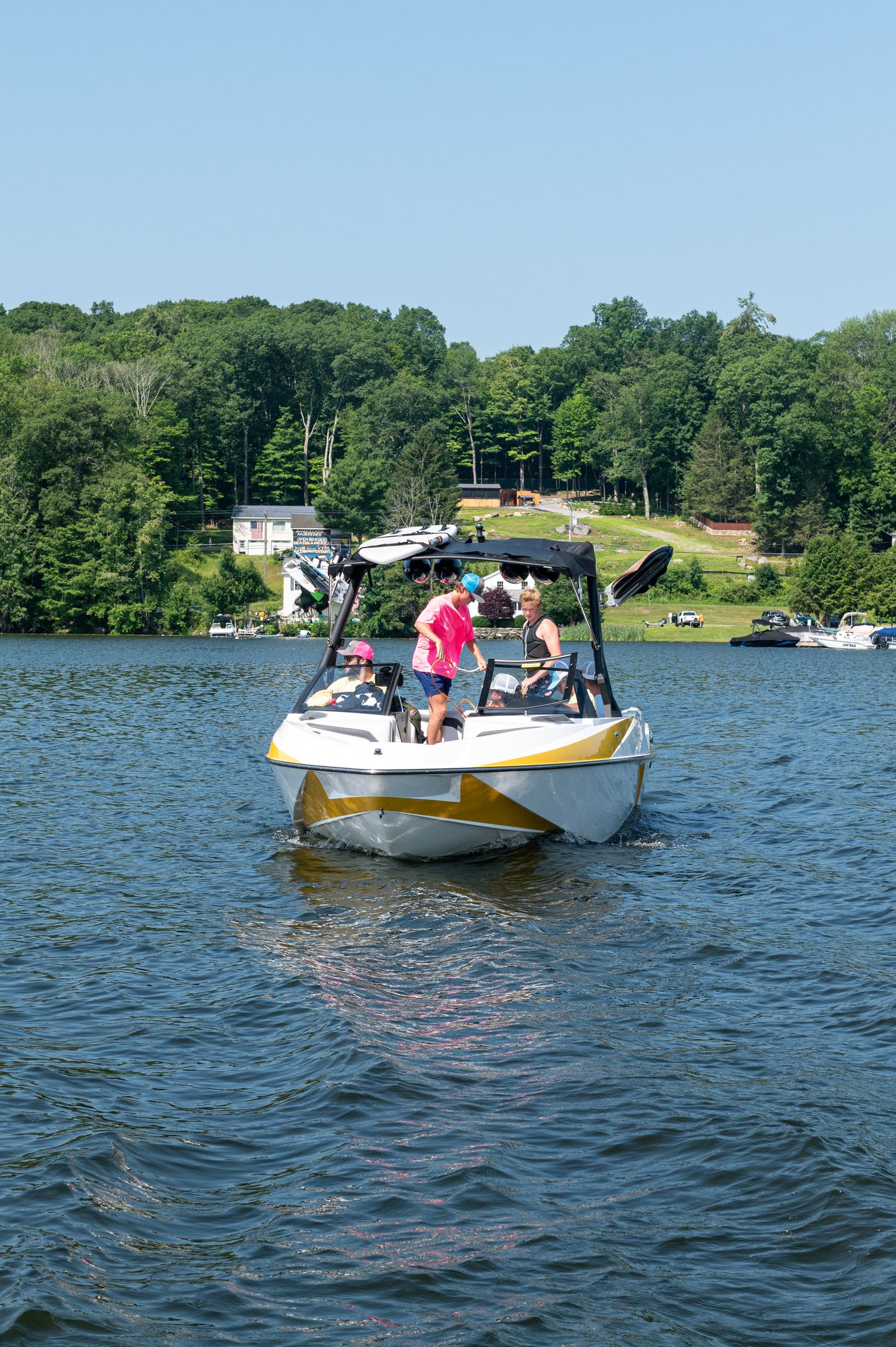
A quiet cove, clean water, and no crowds — swimming off the back of a captained pontoon is the middle path between a state park beach and a wild swim hole.
Lake Swimming vs. Pool & Ocean
People ask us all the time why lake swimming feels different. A few real differences:
- No chlorine. Your eyes and skin will thank you. Lakes have their own ecology, which is why water quality monitoring matters — especially for bacteria after rain.
- No salt. No sting, no rust on swimsuits, no salty hair. You will smell like a lake, though.
- No current. Unlike the ocean, most lakes have no meaningful current in the swim area. That makes them more predictable for kids and weak swimmers — but it also means no lifeguard at most places outside state parks.
- No tide. You can swim the same cove at 10 a.m. and 4 p.m. and the water level is the same.
The trade-off is that most lake swimming in Connecticut is unsupervised. State park beaches have lifeguards in season; nearly everywhere else does not. You're responsible for your own party.
Safety Rules That Actually Matter
Every summer we see the same handful of avoidable situations on the water. Here's what we tell our own guests:
- Swim in designated areas. Buoys and marked swim zones exist to keep you away from propellers. Outside them, boats may not see you.
- Watch for boats, always. Even in a marked area, keep eyes on the water. Never assume a boater sees a swimmer.
- Never swim alone. Even a strong swimmer can cramp or hit their head. A buddy is the single biggest safety upgrade you can make.
- Life jackets for weak swimmers and kids. A properly fitted USCG-approved life jacket is non-negotiable for weak swimmers and children near the water. Many state parks loan them for free at the swim area.
- Never dive in unknown water. Connecticut lakes have drop-offs, rocks, and submerged logs. Feet-first the first time, every time.
When to Go: Timing the Cleanest, Quietest Water
The single best time to swim on almost any Connecticut lake is early morning. The water is glassy, the coves are empty, and motorboat traffic is at its lowest. By 11 a.m. on a Saturday the skiers and pontoons are out and the water is choppy again.
- Weekday vs. weekend: A Tuesday at Lake Waramaug is a different lake than a Saturday. If your schedule allows, swim midweek — you'll often have the swim area nearly to yourself.
- After-rain caution: Heavy rain stirs up bacteria from runoff and can trigger short-term swim advisories. Wait 24–48 hours after a big storm before swimming in any freshwater, and check for cyanobacteria (blue-green algae) advisories. See our Lake Life Guide for more on reading water quality on Connecticut lakes.
- Late season: Late August into early September has the warmest water of the year and thinner crowds once schools go back. It's a sleeper window for a great swim day.
At a Glance: Where to Swim
| Spot | Type | Amenities | Fees |
|---|---|---|---|
| Indian Well SP (Shelton) | State park beach | Lifeguard (season), bathhouse, picnic, waterfall | CT park pass / daily parking fee |
| Black Rock SP (Watertown) | State park beach | Lifeguard (season), bathhouse, hiking | CT park pass / daily parking fee |
| Lake Waramaug SP (New Preston) | State park beach | Lifeguard (season), bathhouse, concession, camping, boat launch | CT park pass / daily parking fee |
| Squantz Pond SP (New Fairfield) | State park beach | Lifeguard (season), bathhouse, picnic, boat launch | CT park pass / daily parking fee |
| Mount Tom SP (Litchfield) | State park pond | Swim area (confirm staffing), bathhouse, hiking | CT park pass / daily parking fee |
| Candlewood Lake (coves) | Boat-anchored swim | No facilities on the water; boat-based | Charter cost (no park fee) |
| Lake Lillinonah (coves) | Boat-anchored swim | No facilities on the water; boat-based | Charter cost (no park fee) |
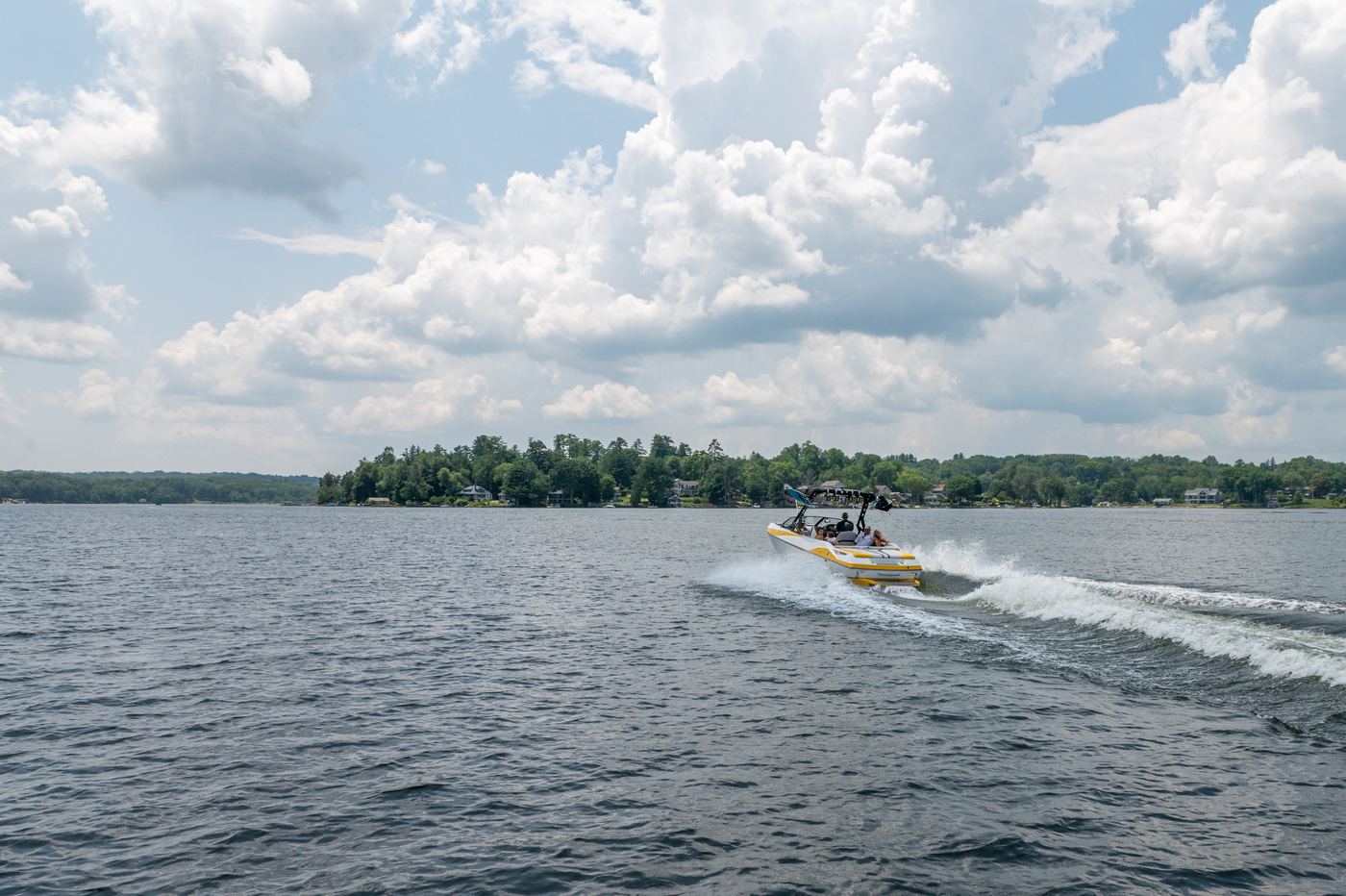
Early morning on a Connecticut lake — the glassiest, quietest, and cleanest window for a swim.
Tips for a Better Swim Day
- Arrive early. At Squantz Pond and Black Rock on a weekend, the lot fills by 10 a.m. and the park closes to new cars. Early also means cooler air and calmer water.
- Bring water shoes. Many Connecticut swim lakes have rocky, rooty, or ledgy entries. A cheap pair of water shoes changes the whole day, especially for kids.
- Pack out your trash. State parks have cans, but swim holes and coves don't. Whatever you brought in leaves with you.
- Bring shade. A pop-up umbrella or a wide-brimmed hat. State park beaches have little natural shade, and the July sun on sand is relentless.
- Check the weather and the water. Storms come up fast in summer. If thunder's within earshot, get out and wait 30 minutes after the last rumble before going back in.
Frequently Asked Questions
The best swim of the summer is off the back of a captained pontoon
No crowded beach, no parking lot, no fee booth — just you and clean water in a quiet cove. Our captained pontoon charters on Candlewood Lake and Lake Lillinonah drop anchor where the water is glassy and the boats aren't, so your group can swim, float, and jump off the back all afternoon. Boat, fuel, gear, and a licensed captain are all included.
Book a Charter See Our Lakes